When the sun goes down at Chiang Dao Hut, the birding day isn’t necessarily over.
The gardens and trees become quieter, the daytime birds begin to settle, and a different group of birds becomes active. Sometimes we hear them calling from the darkness. On fortunate evenings, we may even catch a glimpse or photograph one.
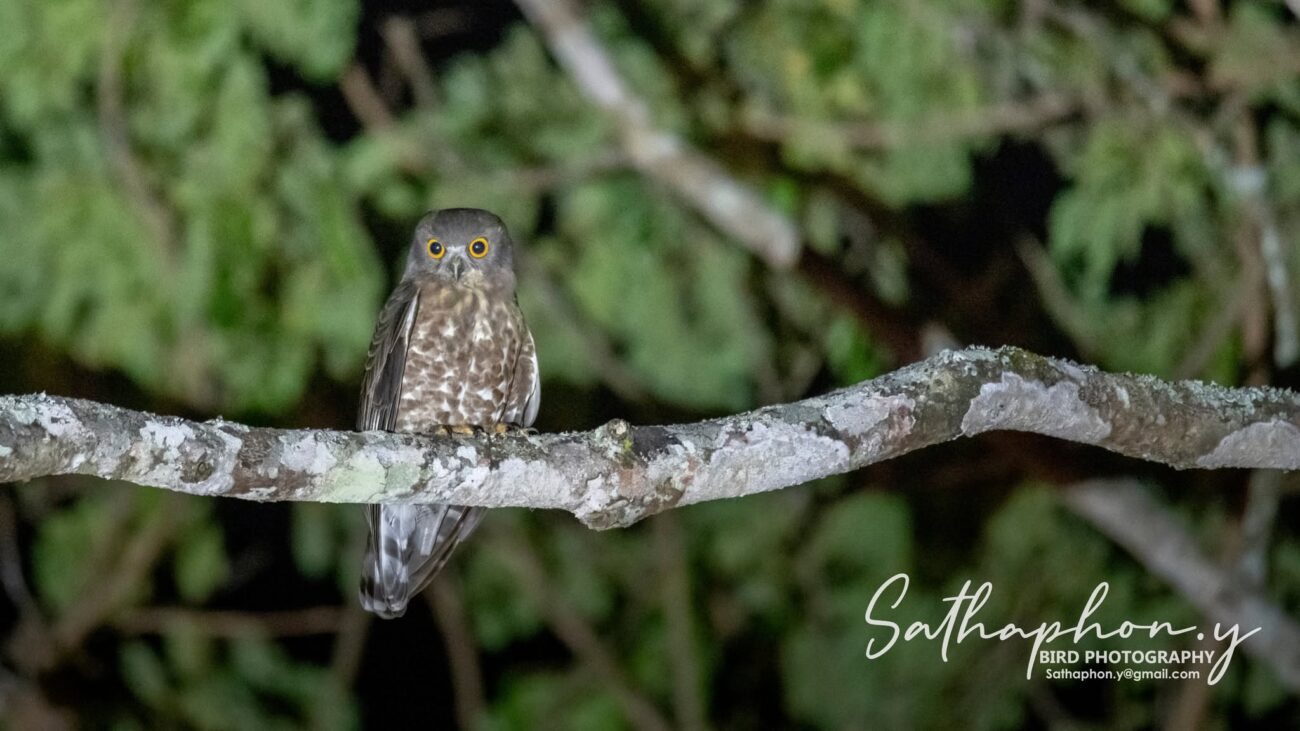
Over the years, we have heard and photographed a surprising variety of nocturnal birds around Chiang Dao Hut.
Owls Around Chiang Dao Hut
Several species of owls have been heard or photographed around the property and surrounding area, including:
- Asian Barred Owlet
- Collared Scops-Owl
- Mountain Scops-Owl
- Spot-bellied Eagle-Owl
- Oriental Bay-Owl
- Brown Wood-Owl
- Oriental Scops-Owl
- Brown Boobook
Each species has its own voice and behaviour.
Often, the first sign that an owl is nearby isn’t seeing it — it’s hearing a call coming from somewhere among the trees.
For guests who are unfamiliar with nocturnal birds, simply hearing these sounds after dark can add another dimension to a stay surrounded by nature.
More Than Owls
Owls are not the only birds that become active after sunset.
We have also heard or photographed other nocturnal species around Chiang Dao Hut, including:
- Blyth’s Frogmouth
- Large-tailed Nightjar
Nightjars can sometimes be heard calling after dark, while frogmouths are much more secretive and can be difficult to notice even when they are nearby.
Their camouflage and nocturnal behaviour make an encounter particularly memorable.
Listen to the Night
You don’t necessarily need to go searching for nocturnal birds.
Sometimes the best experience is simply to sit quietly outside your accommodation and listen.
The sounds after dark are very different from those of the morning. Insects, frogs and other wildlife join the calls of nocturnal birds, creating another side of Chiang Dao’s natural environment.
If you hear an unfamiliar call from the trees, there may be much more happening in the darkness than you realize.
Observe Without Disturbing
Nocturnal birds can be particularly sensitive to disturbance.
If we encounter one, we believe it is important to observe quietly and responsibly. Bright lights should not be directed at a bird for long periods, and birds should not be repeatedly disturbed simply to obtain a photograph.
For us, seeing or photographing a nocturnal bird is a special opportunity — but the welfare of the bird always comes first.
From Morning Until Night
Birdlife is part of the experience of staying at Chiang Dao Hut.
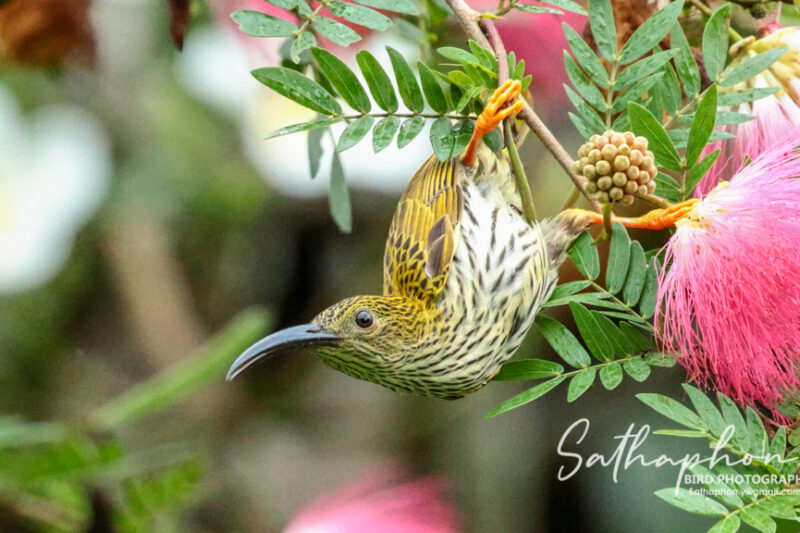
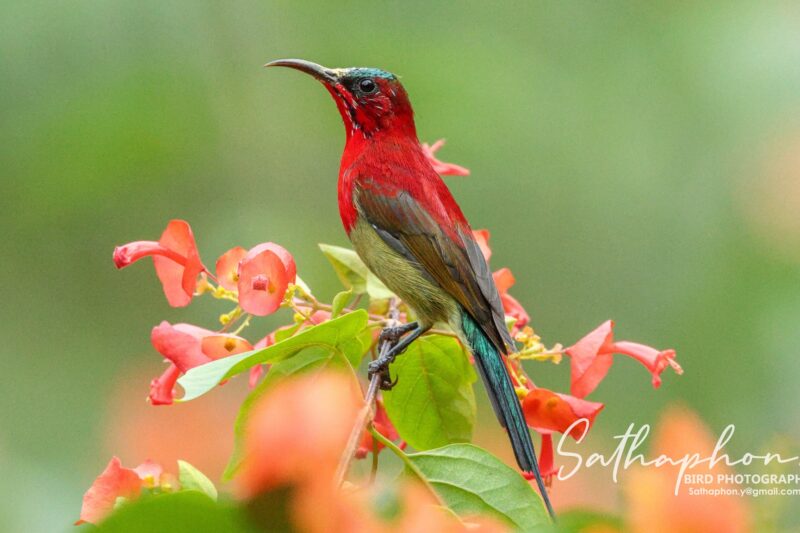
In the morning, you may see sunbirds and other small birds moving through the flowers and trees. During the day, different species visit the gardens and surrounding vegetation.
And after sunset, another world begins.
You may not see an owl every night. You may only hear a distant call from the forest. Sometimes you may hear nothing at all.
But knowing these birds are living and moving through the landscape around us makes a night in Chiang Dao a little more interesting.
Nocturnal Birds Heard or Photographed Around Chiang Dao Hut
Owls: Asian Barred Owlet, Collared Scops-Owl, Mountain Scops-Owl, Spot-bellied Eagle-Owl, Oriental Bay-Owl, Brown Wood-Owl, Oriental Scops-Owl and Brown Boobook.
Other Nocturnal Birds: Blyth’s Frogmouth and Large-tailed Nightjar.
These species are based on our own observations around Chiang Dao Hut. They are wild birds and their presence varies naturally with season, weather, habitat and individual movements. Sightings cannot be guaranteed.