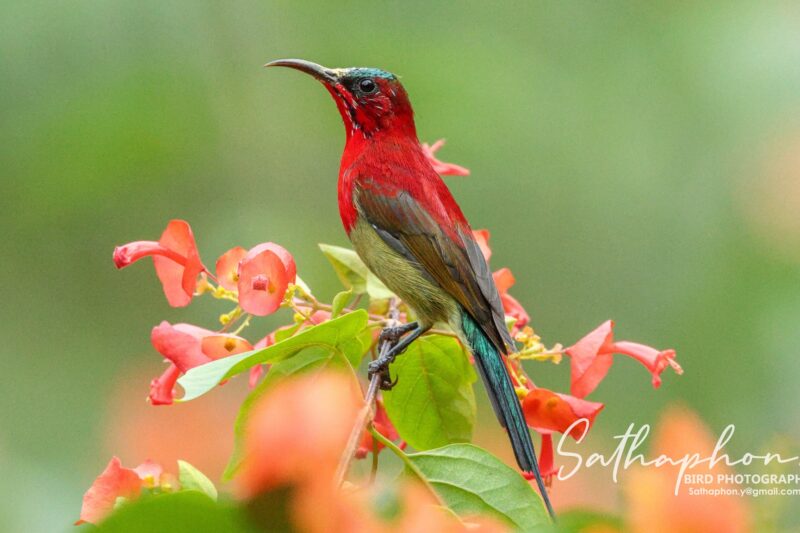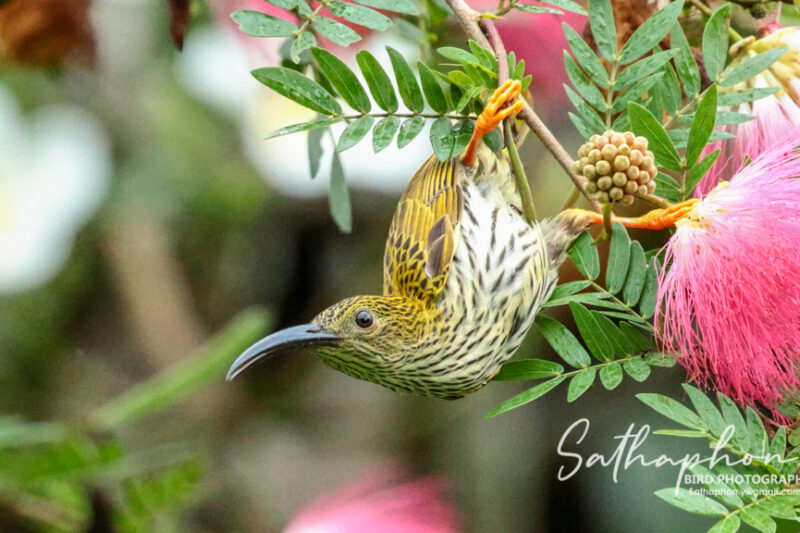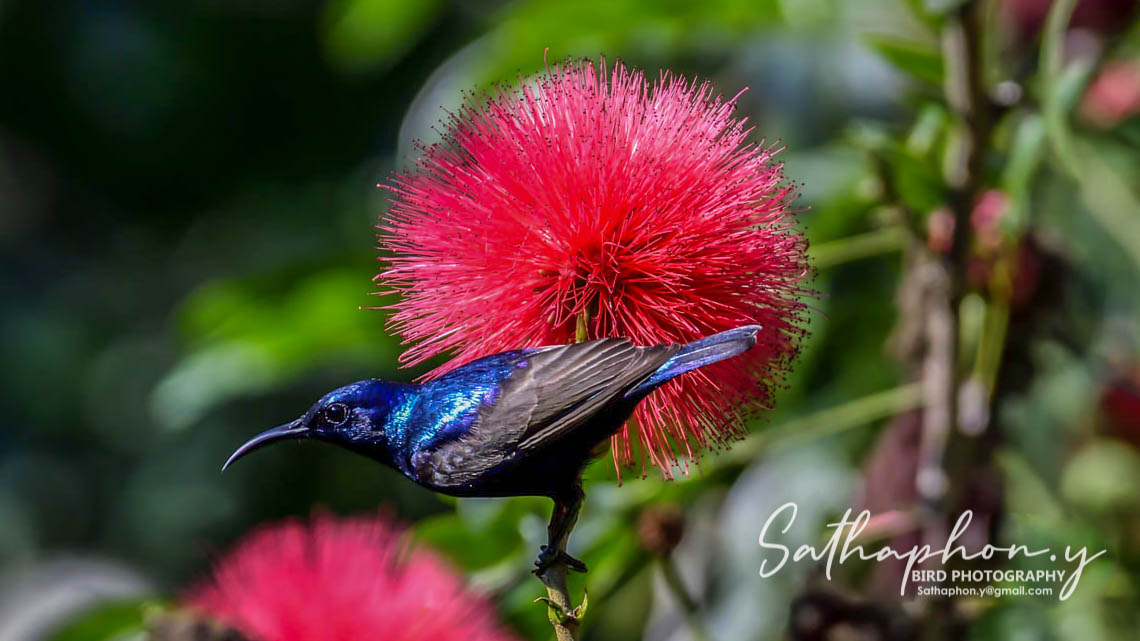
The gardens of Chiang Dao Hut are home to many small birds that visit flowering trees throughout the year. One of the most colorful is the Purple Sunbird (Cinnyris asiaticus), a small nectar-feeding bird that can occasionally be seen moving among the flowers around the property.
Adult males are particularly striking. In good light, their dark plumage reveals beautiful metallic blue and purple colors that can easily disappear into almost black when the bird moves into the shade.
Feeding Among the Flowers
Purple Sunbirds use their slender, curved bills to reach nectar inside flowers. They also feed on small insects, providing them with an additional source of protein.
Around Chiang Dao Hut, flowering plants create natural feeding opportunities for sunbirds and other nectar-feeding species.
Watching these birds move from flower to flower is one of the simple pleasures of spending time in the garden, especially during the quieter hours of the morning.
Flowers Bring Birds Into the Garden
Many of the plants around Chiang Dao Hut are grown not only for their appearance, but also because flowers, fruits and vegetation help create habitat and natural food sources for wildlife.
When different plants begin flowering, bird activity around the garden can change noticeably. Sunbirds may appear to feed on nectar, while spiderhunters, flowerpeckers, bulbuls and insects are attracted to the same flowering areas.
This relationship between plants and wildlife is one of the reasons we continue to develop the gardens at Chiang Dao Hut with nature in mind.
Birdwatching Without Leaving Chiang Dao Hut
Birdwatching here does not always mean travelling somewhere else.
Sometimes an interesting observation can happen only a short walk from your accommodation. A flowering tree may suddenly become active with birds, butterflies and insects, providing an opportunity to simply stop and watch.
The Purple Sunbird is one of the colorful visitors that reminds us how much wildlife can be found close to home when a garden provides the right food and habitat.