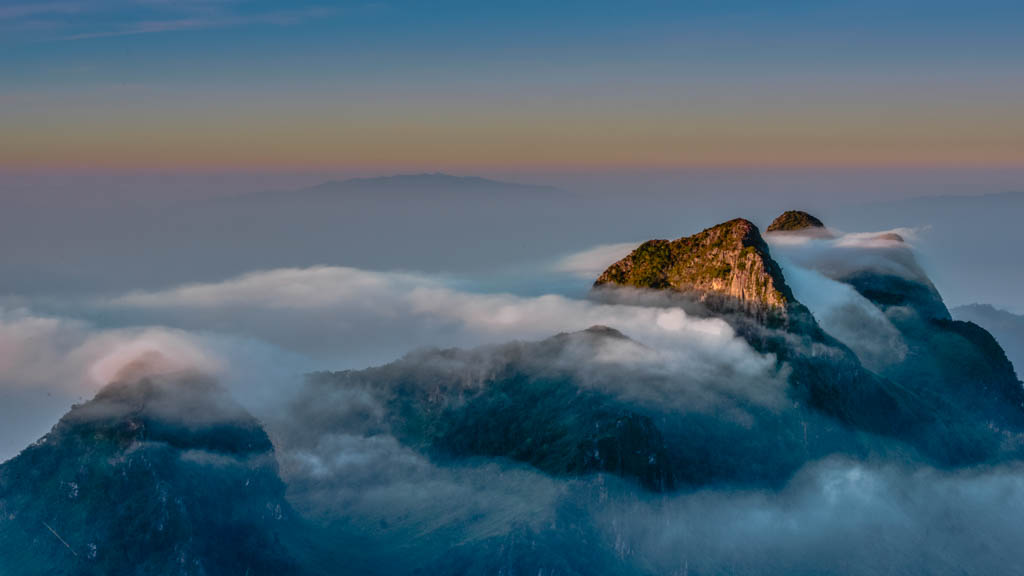
Doi Luang Chiang Dao is one of the most iconic mountain destinations in Northern Thailand.
For many travelers, reaching the summit is a dream — a chance to experience sea clouds, limestone peaks, rare alpine flowers, and one of the most beautiful hiking trails in the country.
As Thailand’s third-highest mountain and part of a UNESCO Biosphere Reserve, Chiang Dao attracts hikers, photographers, birdwatchers, and nature lovers from around the world.
However, many visitors arrive in Chiang Dao without realizing that hiking to the summit requires advance registration and strict permission procedures.
Unlike a normal national park, Doi Luang Chiang Dao is managed by the Chiang Dao Wildlife Sanctuary, which operates under different conservation rules designed to protect the fragile mountain ecosystem.
Today, access to the summit is limited and carefully controlled.
Visitors must usually:
- Register in advance
- Follow seasonal opening schedules
- Join approved hiking systems or local guides
- Respect conservation regulations
- Carry all trash back down the mountain
The number of hikers allowed each day is also limited.
For many travelers, these complicated procedures can make Doi Luang Chiang Dao difficult to access. Some visitors eventually change their travel plans, which is understandable — but also a little unfortunate.
Because Chiang Dao is much more than just its highest peak.
Beyond the famous summit, the Chiang Dao region offers another side of Northern Thailand that many travelers never discover.
The surrounding area is filled with peaceful villages, local culture, forest landscapes, natural hot springs, coffee shops under giant trees, birdlife, orchids, butterflies, and quiet nature trails.
Here, travelers can experience a slower rhythm of life and a deeper connection between people and nature.
During different seasons, the forests around Chiang Dao constantly change. In the early rainy season, mushrooms and orchids begin to appear. In winter, migratory birds arrive from distant countries. Even a simple morning walk can become a meaningful nature experience.
For local people, Chiang Dao is not only a mountain.
It is home, culture, tradition, and a living landscape shared between forests, wildlife, and communities.
Sometimes, not reaching the summit does not mean missing Chiang Dao at all.
Because the true beauty of Chiang Dao may not only be found on the top of the mountain —
but also in the forests, villages, and quiet moments surrounding it.
